

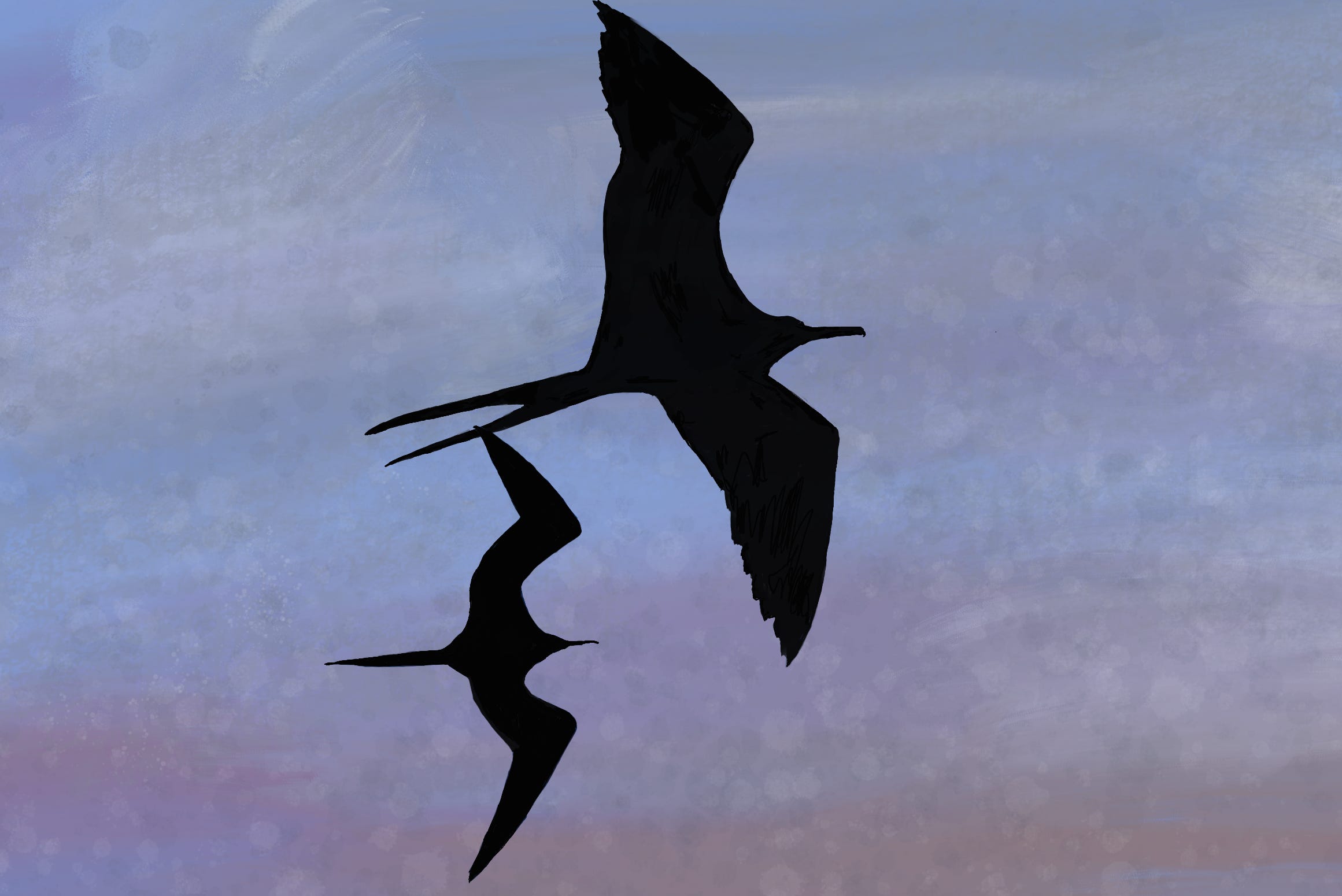
Fauna: The Magnificent Frigatebird (Fregata magnificens) is a large bird found in coastal areas throughout much of the Americas. In southern Florida, they’re found year-round and while they will nest in dense shrubs and trees, one of their favorites in South Florida is the red mangrove. The only place I ever see these wildly-noticeable birds is along a stretch of Dania Beach and Hollywood beach where there are protected mangroves on the Intracoastal side of the barrier island.
To see one in the sky is to know you’ve seen something special. They have noticeably point wings with forked tails that they usually keep together in a long point. These birds have the larges wing area relative to their body mass which allows them to do something called dynamic soaring. They’re also pirates who steal food from other birds, especially gulls.
I mostly see them from the beaches as they glide by way up in the skies, but the other day I got to see them up close from a student’s condo. A male, which is what I typically see, flew past followed by a female, another male, and a youngster with the white belly typical of young frigatebirds.
Unfortunately, that habitat that makes them a frequent site along Dania and Hollywood is under threat. Again. (Florida really can’t seem to stop bulldozing habitats and then wondering where all their endemic, native, and common species went.)
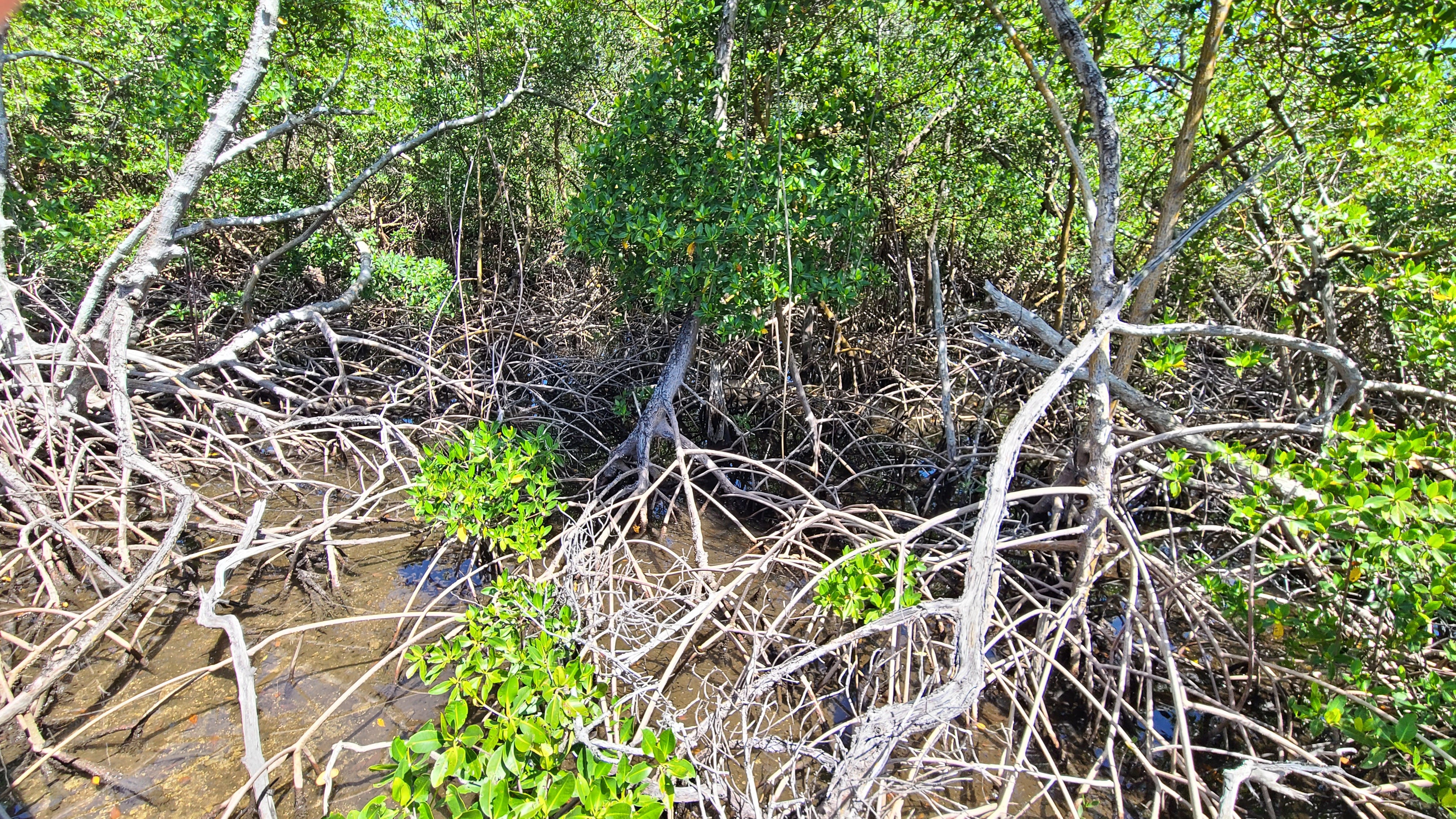
Flora: The Red Mangrove (Rhizophora mangle) is important for more than just birds. Mangrove forests are home to some very interesting-looking crabs, are nurseries for baby fish, help hold coastlines in place during storms and King Tide events, and create shelter, shade, and oxygen for us all. They are also salt tolerant so they’re well adapted for coastal estuaries.

Speaking of survival, did you know you can lick the leaves of mangroves to get a little dose of salt? One reason drinks that promise increased hydration are different from regular water is sodium. In fact, if you ever leave your hydration drink sitting around too long and it warms up a bit, there’s a good chance you’ll taste that saltiness. (The role sodium and chloride play in hydration is also why you tend to crave salty snacks after a day out on the beach or at the lake in summer.) If you’re ever out hiking or paddling near the mangroves and find yourself a little lacking in sodium, you can grab a mangrove leaf (if it hasn’t rained recently) and lick the salt crystals off.
Why on earth are there salt crystals on the leaves? Because that’s how the mangroves expel the salt from the water they grow in. It’s a brilliant way for the plants to process the salt in the water they grow in.
Unfortunately, Florida has a problem with hanging onto their mangroves, despite all the trees’ positives. In Dania Beach, a developer has already been told “no” once to developing on environmentally-sensitive lands and he really doesn’t want to accept that as an answer. A petition is still collecting signatures and there are still local calls to contact Dania and Broward officials to keep this developer from ruining this natural ecosystem.
Books This week’s books include The Last American Road Trip by Sara Kendzior. In her collection of essays, she chronicles road trips with her family starting after the first election of Trump when it seemed possible (but not quite as possible) that we’d lose all our public lands and wild spaces because of him. She traverses the Southwest, Texas, the swampy Southern states, and anywhere else within a day or two’s drive of her home in Missouri. Along the way, they experience all the roadside attractions they can manage while also catching a glimpse at an America that no longer exists, an America that informs the current, an America that never existed, and an America that’s still possible.
The second book of the week is The Financial Lives of Poets by Jess Walter. Where the nonfiction book of the week is introspective and reflective and at times quite deep, the novel is the tale of a guy trapped in the collapse of the newspaper industry, the declining economy in general (making it hard for him to find another job), and the general awfulness of the modern world. He stumbles across a couple of potheads at a convenience store and proceeds to make one bad decision after another until his idea for a website about financial advice delivered via poetry starts to sound sane. The main character is a bit whiny, but his situations are amusing enough to mostly keep from trying to slap him through the pages.
Art Andy Morgan is this week’s artist because I’ve been enamored of his photography since stumbling across this image at Clyde Butcher’s Big Cypress Gallery. Andy Morgan creates some amazing photographic works and travels around capturing natural beauty all over the place. That said, as much as I love a good road trip, I’m partial to his Everglades and Big Cypress pictures because they offer an incredible look into that world (much like Butcher himself though in a completely different style).
Music This week’s wild card is brought to you by the SirriusXM station 80s on 8 which the car decided I really needed to listen to Thursday morning on the way to work.
When I use the husband’s fancy “new” car1, I usually listen to audiobooks I need to return to the library since it’s impossible to listen to anything but the loudest music in my Jeep (see footnote). Apparently, on this particular morning, instead of connecting to my phone and the Libby app, the Blazer decided I really needed to relive my childhood on my way to guide summer camp field trips.
Suddenly, in my shorts with my probably-too-long hair (about a quarter gray at this point), I was in between 7th and 8th grades. So, as a nod to the mid-to-late 80s theme of that morning:
Have a great week!

His car is from 2020, but considering my Jeep rolled off the factory assembly line in November of 1990, it’s basically from the future.
I envy your easy access to frigate birds.